Showing posts with label Mint Sets - Kolkata. Show all posts

2018 - PC Mahalanobis

The Link to All Articles is here


The second release ceremony of Calendar year 2018 saw the release of coins of Rs 125 and Rs 5 on the 125th Birth Anniverary of Professor Prasanta Chandra Mahalanobis. The day is celebrated as Indian Stastical day. The coin and the details of the set are;


Prasanta Chandra Mahalanobis (29 June 1893 – 28 June 1972) was an Indian scientist and applied statistician. He is best remembered for the Mahalanobis distance, a statistical measure, and for being one of the members of the first Planning Commission of free India. He made pioneering studies in anthropometry in India. He founded the Indian Statistical Institute, and contributed to the design of large-scale sample surveys

Many colleagues of Mahalanobis took an interest in statistics. An informal group developed in the Statistical Laboratory, which was located in his room at the Presidency College, Calcutta. On 17 December 1931 Mahalanobis called a meeting with Pramatha Nath Banerji (Minto Professor of Economics), Nikhil Ranjan Sen (Khaira Professor of Applied Mathematics) and Sir R. N. Mukherji. Together they established the Indian Statistical Institute (ISI), and formally registered on 28 April 1932 as a non-profit distributing learned society under the Societies Registration Act XXI of 1860.


Release Function

The Vice President, Shri M. Venkaiah Naidu releasing the Commemorative Stamp, at the closing ceremony of 125th Birth Anniversary of Prof. P.C. Mahalanobis and the 12th Statistical Day celebration, in Kolkata on June 29, 2018. The Union Minister for Statistics and Programme Implementation, Shri D.V. Sadananda Gowda and other dignitaries are also seen.

Executive Sets
Coins of Rs 125 and Rs 5


2017 - Pandit Deendayal Upadhyaya

The Link to All Articles is here


The third release function saw the release of a coin commemorating Pandit Deendayal Upadhyaya.
The details are;


Pandit Deendayal Upadhyay (25 September 1916 – 11 February 1968) was an philosopher, economist, sociologist, historian, journalist, and political scientist. He was one of the most important leaders of the Bharatiya Jana Sangh, the forerunner of the present day Bharatiya Janata Party.

While he was a student at Sanatan College, Kanpur in 1937, he came into contact with the Rashtriya Swayamsevak Sangh (RSS) through his classmate Baluji Mahashabde. He met the founder of the RSS, K. B. Hedgewar, who engaged with him in an intellectual discussion at one of the shakhas. Sunder Singh Bhandari was also one of his classmates at Kanpur. This gave a fillip to his public life. He dedicated himself to full-time work in the RSS from 1942.

In 1951, when Syama Prasad Mookerjee founded the Bharatiya Jana Sangh, Deendayal was seconded to the party by the RSS, tasked with moulding it into a genuine member of the Sangh Parivar. He was appointed as General Secretary of its Uttar Pradesh branch, and later the all-India General Secretary. The acumen and meticulousness shown by Deendayal deeply impressed Syama Prasad Mookerjee and elicited his famous remark:

" If I had two Deendayals, I could transform the political face of India. "

After Mookerjee's death in 1953, the entire burden of nurturing the orphaned organisation and building it up as a nationwide movement fell on the young shoulders of Deendayal. For 15 years, he remained the outfit's general secretary and built it up, brick by brick.

He was assassinated on 11 February 1968 at Mughalsarai in UP, while travelling in a train.


2017 – Shrimad Rajchandra

The Link to All Articles is here

A slow start to the calendar year 2017. June saw the first commemorative release function on the occasion of 150 years of Shrimad Rajchandra.


The coin and the details of the set are;


ShrimadRajchandra, was a prominent Jain poet, philosopher, and scholar. He is best known for his teachings on Jainism and as a spiritual guide of Mahatma Gandhi.
Shrimad Rajchandra was born on November 9, 1867, in Vavania Bandar,Morbi, Gujarat. He started speaking in public at age of 10 and writing articles at 11. He performedShatavdhan (a difficult memory test of memorizing 100 different things at a time) at Sir Framji Cowasji Institute in Mumbai in 1887. The same year, he married to Jhabakben and then engaged in the pearls and diamond business. At the age of 32, he contracted an illness from which he never recovered. He died on April 9, 1901 in Rajkot, Gujarat.
He summarized his interpretation of Jainism in Atma Siddhi, a Gujarati short verse poem written when he was 28 years old. In addition, throughout his life, he wrote 800 letters charting his spiritual journey. In his letters, he mentioned having the memory of several past lives at the age of seven, and in a letter written in 1890, he mentions having achieved self-realization.
He is well known as a spiritual guide of Mahatma Gandhi. They were introduced in Mumbai in 1891 and had various conversations through letters while Gandhi was in South Africa. Gandhi noted his impression of Shrimad Rajchandra in his autobiography, The Story of My Experiments with Truth, calling Raichandbhai his "guide and helper" and his "refuge… in moments of spiritual crisis". He had advised Gandhi to be patient and to study Hinduism deeply.


Release Function


The Prime Minister, Shri Narendra Modi releasing the commemorative coin on Shrimad Rajchandraji at Sabarmati Ashram, in Ahmedabad, Gujarat on June 29, 2017. The Chief Minister of Gujarat, Shri Vijay Rupani is also seen.

PS: If you notice the initial design of Rs 150 coin, the year is depicted below the bust. In Rs 10 it is on left and right. However in the final released coins both the coins of Rs 150 as well as Rs 10 have the same design.

Executive Set:


2016 - Chaitanya Mahaprabhu


Chaitanya Mahaprabhu arrived in Vrindavan on the day of Karttik Purnima in the year 1515. The celebration of his arrival here this year coincides with Karttik Niyam seva which has doubled the excitement of the devotees. Celebrations lead by ISKON were organized in various parts of India including Vrindavan.


The eight release function saw the release of a coin commemorating the as part of year long celebration of 500 years of return of Chaitnya Mahaprabhu to Vrindavan. Coins of Rs 500 and Rs 10 were released.

The coin and the details of the set are;


Release Function


25-Nov-2016: The Secretary, Ministry of Culture, Shri N.K. Sinha releasing a commemorative non-circulation coin of Rs.500 and a circulation coin of Rs.10 as part of year-long celebrations of commemoration of “500th Anniversary of Shri Krishna Chaitanya Mahaprabhu’s Coming to Vrindavan”, in New Delhi

Chaitanya Mahaprabhu (18 February 1486 – 14 June 1534) is believed by his devotees to be Krishna himself who appeared in the form of His own devotee in order to teach the people of this world the process of Bhakti and how to attain the perfection of life. He is considered as the most merciful manifestation of Krishna. Chaitanya was the proponent for the Vaishnava school of Bhakti yoga (meaning loving devotion to God), based on Bhagavata Purana and Bhagavad Gita, Of various incarnations of Vishnu, he is revered as Krishna.

Chaitanya Mahaprabhu is sometimes referred to by the names Gauranga or Gaura due to his fair complexion, and Nimai due to his being born underneath a Neem tree. There is no evidence, however, that he was born under a Neem Tree. He was very naughty in his young days. His original name was Vishambhar. He was a brilliant student and Nimai was his nickname. At an early age he became an scholar and opened a school. His teachings helped flourish Bhakti movement. in east India, particularly Bengal and Odisha from 16th century onwards.

According to Shrimad Bhagvatam 1.7.13-14, Chaitanya Mahaprabhu was Krishna himself in the garb of a devotee of Krishna and therefore the version of both Lord Krishna and Shri Krishna Chaitanya Mahaprabhu are identical.

“Sometimes Shri Krishna himself wonders how much transcendental pleasure is within him, and in order to taste his own potency, he sometimes takes the position of tasting himself. Lord Chaitanya is Krishna himself, but he appears as a devotee to taste the sweetness of the transcendental mellow in himself, which is tasted by Shrimati Radha Rani the greatest of all devotees, as indicated in Shrimad Bhagvatam 3.33.4.

In the Adi Purana and in Narada Purana, the Lord says, “I shall advent in the form of a Brahmana devotee (aham eva dvija shreshtho), I shall hide my factual identity (pracchanna vigraha), and I shall deliver all the worlds (lokam raksami sarvada).


2015 – 200th Birth Anniversary of Tatya Tope - UNC Set

The Link to All Articles is here
The Link to Proof and UNC sets is here


The Post gives the details of UNC Set. For Proof Set Refer to the Previous Post. 


The fifth release function in 2016 saw the release of a coin commemorating the 200th Birth Anniversary of Tatya Tope. This would be the first time a coin of denomination Rs 200 was released. 

Technically Tope's Birth year is 1814 and hence the 200th year should have started in 2014 and completed in 2015. The coins finally released in 2016 on Martyr Day.

The details are as below;


Ramachandra Pandurang Tope (1814 – 18 April 1859) was an leader in the Rebellion of 1857 and one of its notable generals. He is better known by his nickname Tatya Tope, which is also transliterated as Tantya Tope or Tantia Topi

A personal adherent of Nana Sahib of Bithur, he progressed with the Gwalior contingent after the British reoccupied Kanpur and forced General Windham to retreat from the city. Later on, he came to the relief of Rani Lakshmibai of Jhansi and with her seized the city of Gwalior. However, he was defeated by General Napier's British Indian troops at Ranod and after a further defeat at Sikarabandoned the campaign. He was executed by the British Government at Shivpuri on 18 April 1859.

Tatya Tope was Nana Sahib's close associate and general. During the Siege of Cawnpore in 1857, Nana Sahib's forces attacked the British entrenchment at Kanpur in June 1857. The low supplies of food, water and medicine added to the misery of the British Forces who accepted Nana Sahib offer of safe passage to Allahabad.

Many of General Wheeler's men were either killed or captured. The surviving British women and children were moved from the Savada House to Bibighar, "the House of the Ladies", a villa-type house in Rajasthan.

Nana Sahib decided to use the captives for bargaining with the British. The Company forces from Allahabad, under the command of General Henry Havelock, advanced relentlessly towards Cawnpore. Two forces sent by Nana Sahib to check their advance were defeated. When it became clear that the bargaining attempts had failed, an order was given to murder the women and children imprisoned at Bibighar, on July 15. The details of the incident, such as who ordered the massacre, are not clear. The sepoys refused to kill the captive women and children, but some of them agreed to remove the women and children from the courtyard, when Tope threatened to execute them for dereliction of duty.

The Company forces reached Cawnpore on July 16, and captured the city. Both Nana Sahib and Tope escaped from the city. While Nana Sahib fled to an unknown place, Tope continued the fight against the British. In November 1857, he gathered a large army, mainly consisting of the rebel soldiers from the Gwalior contingent, to recapture Cawnpore. By November 19, Tope's advance guard of 6,000 dominated all the routes west and north-west of Cawnpore. However, his forces were defeated by the Company forces under Colin Campbell in the Second Battle of Cawnpore, marking the end of the rebellion in the Cawnpore area. Tope then joined Rani Laxmi Bai at Kalpi.

After losing Gwalior to the British, Tope and Rao Sahib, nephew of Nana Sahib, fled into Rajputana. He was able to induce the army of Tonk to join him. Tope was defeated at several places

Tope escaped alone into the jungles of Paron. At this point he met Man Singh, raja of Narwar and decided to stay with them. The British forces had failed to subdue Tope for over a year.

Tope was however betrayed into the hands of the British by his trusted friend, Man Singh, while asleep in his camp in the Paron forest. He was captured on 7 April 1859 by a detachment of native infantry from British General Richard John Meade's troops led to him by Singh and escorted to Shivpuri where he was tried by a military court. Tope admitted the charges brought before him saying that he was answerable to his master the Peshwa only. He was executed at the gallows on 18 April 1859.


Proof Set
Refer to Previous Post


UNC Set
Coins of Rs 200 and Rs 10


The Coins of Rs 200 and Rs 10


2015 – 200th Birth Anniversary of Tatya Tope - Proof Set

The Link to All Articles is here
The Link to Proof and UNC sets is here

The Post gives the details of Proof Set. For UNC Set Refer to the Next Post. 

The fifth release function in 2016 saw the release of a coin commemorating the 200th Birth Anniversary of Tatya Tope. This would be the first time a coin of denomination Rs 200 was released. 

Technically Tope's Birth year is 1814 and hence the 200th year should have started in 2014 and completed in 2015. The coins finally released in 2016 on Martyr Day.

The details are as below;


Release Function


The Minister of State for Culture (Independent Charge), Tourism (Independent Charge) and Civil Aviation, Dr. Mahesh Sharma releasing a Commemorative Coin of Rs.200/- and a Circulation Coin of Rs.10/- on Tatya Tope, on the occasion of his Martyr Day, in New Delhi on April 18, 2016. The Secretary, Ministry of Culture, Shri Narendra Kumar Sinha and other dignitaries are also seen.


Ramachandra Pandurang Tope (1814 – 18 April 1859) was an leader in the Rebellion of 1857 and one of its notable generals. He is better known by his nickname Tatya Tope, which is also transliterated as Tantya Tope or Tantia Topi

A personal adherent of Nana Sahib of Bithur, he progressed with the Gwalior contingent after the British reoccupied Kanpur and forced General Windham to retreat from the city. Later on, he came to the relief of Rani Lakshmibai of Jhansi and with her seized the city of Gwalior. However, he was defeated by General Napier's British Indian troops at Ranod and after a further defeat at Sikarabandoned the campaign. He was executed by the British Government at Shivpuri on 18 April 1859.

Tatya Tope was Nana Sahib's close associate and general. During the Siege of Cawnpore in 1857, Nana Sahib's forces attacked the British entrenchment at Kanpur in June 1857. The low supplies of food, water and medicine added to the misery of the British Forces who accepted Nana Sahib offer of safe passage to Allahabad.

Many of General Wheeler's men were either killed or captured. The surviving British women and children were moved from the Savada House to Bibighar, "the House of the Ladies", a villa-type house in Rajasthan.

Nana Sahib decided to use the captives for bargaining with the British. The Company forces from Allahabad, under the command of General Henry Havelock, advanced relentlessly towards Cawnpore. Two forces sent by Nana Sahib to check their advance were defeated. When it became clear that the bargaining attempts had failed, an order was given to murder the women and children imprisoned at Bibighar, on July 15. The details of the incident, such as who ordered the massacre, are not clear. The sepoys refused to kill the captive women and children, but some of them agreed to remove the women and children from the courtyard, when Tope threatened to execute them for dereliction of duty.

The Company forces reached Cawnpore on July 16, and captured the city. Both Nana Sahib and Tope escaped from the city. While Nana Sahib fled to an unknown place, Tope continued the fight against the British. In November 1857, he gathered a large army, mainly consisting of the rebel soldiers from the Gwalior contingent, to recapture Cawnpore. By November 19, Tope's advance guard of 6,000 dominated all the routes west and north-west of Cawnpore. However, his forces were defeated by the Company forces under Colin Campbell in the Second Battle of Cawnpore, marking the end of the rebellion in the Cawnpore area. Tope then joined Rani Laxmi Bai at Kalpi.

After losing Gwalior to the British, Tope and Rao Sahib, nephew of Nana Sahib, fled into Rajputana. He was able to induce the army of Tonk to join him. Tope was defeated at several places

Tope escaped alone into the jungles of Paron. At this point he met Man Singh, raja of Narwar and decided to stay with them. The British forces had failed to subdue Tope for over a year.

Tope was however betrayed into the hands of the British by his trusted friend, Man Singh, while asleep in his camp in the Paron forest. He was captured on 7 April 1859 by a detachment of native infantry from British General Richard John Meade's troops led to him by Singh and escorted to Shivpuri where he was tried by a military court. Tope admitted the charges brought before him saying that he was answerable to his master the Peshwa only. He was executed at the gallows on 18 April 1859.


Proof Set
Coins of Rs 200 and Rs 10


UNC Set
Coins of Rs 200 and Rs 10
Refer to Next Post


2016 - Biju Patniak Birth Centenary - UNC Set

The Link to All Articles is here

This Post gives the details of the UNC Set. For Proof set refer to Previous post

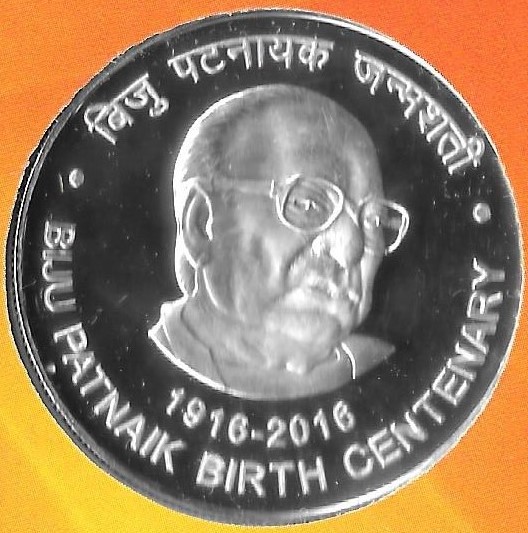
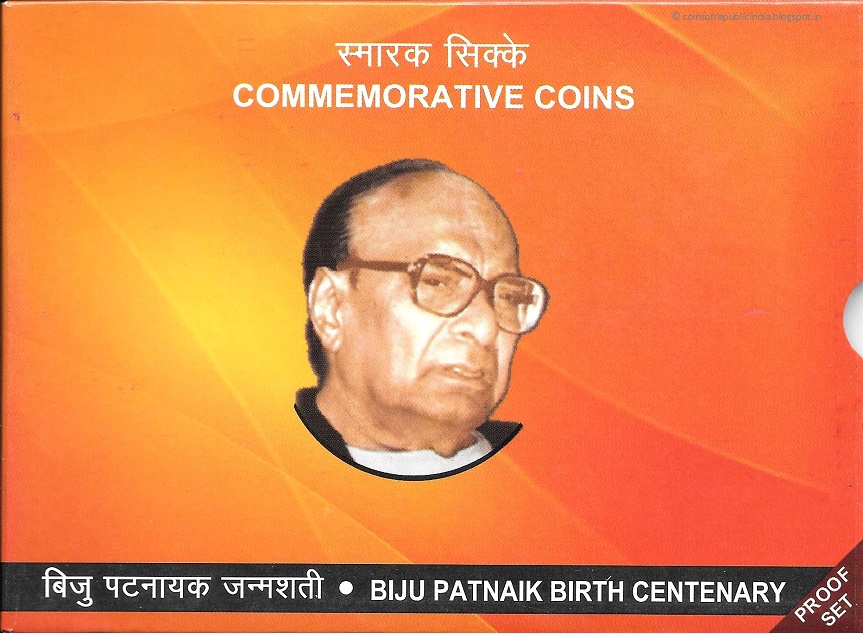
The Second release function saw the release of a coin commemorating Birth Centenary of Biju Patnaik. The coin and the details of the set are;

The details are as below;


Bijayananda Patnaik, popularly known as Biju Patnaik (5 March 1916 – 17 April 1997) was an politician and Chief Minister of Odisha for two terms.

He was educated at Ravenshaw College in Odisha but due to his interest in aviation he dropped out and trained as a pilot. At the start of the Second World War he joined the Royal Indian Air Force eventually becoming head of air transport command.

Biju Patnaik met with Jawaharlal Nehru during his participation in Indian freedom struggle and became one of his trusted friends. Nehru viewed the freedom struggle of the Indonesian people as parallel to that of India, and viewed Indonesia as a potential ally. When the Dutch attempted to quell Indonesian independence on 21 July 1947, President Sukarno ordered Sjahrir, the former prime minister of Indonesia, to leave the country to attend the first Inter-Asia Conference, organised by Nehru, in July 1947 and to foment international public opinion against the Dutch. Sjahrir was unable to leave as the Dutch controlled the Indonesian sea and air routes. Nehru asked Biju Patnaik, who was adventurous and an expert pilot, to rescue Sjahrir. Biju Patnaik and his wife flew to Java and brought Sultan Sjahrir out on a Dakota reaching India via Singapore on 24 July 1947. For this act of bravery, Patnaik was given honorary citizenship in Indonesia and awarded the 'Bhoomi Putra', the highest Indonesian award, rarely granted to a foreigner. In 1996, when Indonesia was celebrating its 50th Independence Day, Biju Patnaik was awarded the highest national award, the 'Bintang Jasa Utama'.

Shortly after independence Pakistani tribesman invaded Kashmir and at Nehru's request he helped airlift the first Indian soldiers into Srinagar. Biju Patnaik piloted the first plane that left Palam Airport at Delhi on 27 October 1947 at dawn and landed at Srinagar Airport in the early morning. He brought 17 soldiers of 1-Sikh regiment commanded by Lt.Col. Dewan Ranjit Rai

Patnaik's political ideals were centred in socialism and federalism. His strong advocacy for equal resources to all Indian states who needed such, made him a champion of his Oriya constituents.

In 1946 Patnaik was elected uncontested to the Odisha Legislative Assembly from North Cuttack constituency. In 1952 and 1957 he won from Jagannath Prasad and Surada, respectively. In 1961 he assumed the presidency of the state Congress. Under his leadership, the Congress Party won 82 of 140 seats and Patnaik (representing Chowdwar constituency) became the chief minister of Odisha on 23 June 1961 and remained in the position until 2 October 1963 when he resigned from the post under the Kamaraj Plan to revitalise the Congress party. He was the Chief Minister of Odisha at the age of 45.

Patnaik was close to Indira Gandhi who took over the Congress Party in 1967. However, they clashed in 1969 over the Presidential election. He left the Congress and formed a regional party; the Utkal Congress. In the 1971 assembly poll, his party did reasonably well. Patnaik then re-established contact with his old friend Jayaprakash Narayan and plunged into the JP movement as it picked up momentum in 1974. When the Emergency was declared in 1975, Biju Patnaik was one of the first to be arrested along with other opposition leaders.

He was released in 1977. Later, in the same year, he was elected to the Lok Sabha for the first time from Kendrapara and became Union minister for steel and mines in both the Morarji Desai and the Charan Singh governments until 1979. He was re-elected to the Lok Sabha again in 1980 and 1984 from Kendrapara as Janata Party candidate despite the Congress wave in 1984 following Indira Gandhi's death. With the Congress defeat in 1989, he bounced back into the political limelight. However, after playing a key behind-the-scenes role in manoeuvring V.P.Singh to the Prime Minister's post, he again chose to go back to Odisha, and prepared for the assembly election. In 1990 state assembly election, the Janata Dal received a thumping majority (two third assembly seats) which saw Biju Patnaik being the Chief Minister of Odisha for the second time until 1995.

He was re-elected to the Lok Sabha in 1996 from Cuttack and Aska constituencies as a Janata Dal candidate. He retained the latter until his death on 17 April 1997 of cardio-respiratory failure.

Proof Set
Coins of Rs 100 and Rs 5. Refer to previous post

UNC Set
Coins of Rs 1000 and Rs 5


2016 - Biju Patniak Birth Centenary - Proof Set

The Link to All Articles is here

This Post gives the details of the Proof Set. For UNC set refer to next post

The Second release function saw the release of a coin commemorating Birth Centenary of Biju Patnaik. The coin and the details of the set are;

The details are as below;


Release Function:


5-Mar-2016: As part of the birth centenary celebrations of former chief minister Biju Patnaik, Governor SC Jamir and Chief Minister Naveen Patnaik on Saturday released special commemorative coins of Rs 5 and Rs 100 denomination with the freedom fighter’s image at a function organised by Information and Public Relation (I&PR) department at Jayadev Bhavan Bhubaneswar.

Among others Tourism and Culture minister Ashok Panda, Health minister Atanu Sabya Sachi Nayak, MP Prassana Patasani, MLA Priyadarshi Mishra, Bijay Mohany and secretary of I & PR department were also present during the programme.


Bijayananda Patnaik, popularly known as Biju Patnaik (5 March 1916 – 17 April 1997) was an politician and Chief Minister of Odisha for two terms.

He was educated at Ravenshaw College in Odisha but due to his interest in aviation he dropped out and trained as a pilot. At the start of the Second World War he joined the Royal Indian Air Force eventually becoming head of air transport command.

Biju Patnaik met with Jawaharlal Nehru during his participation in Indian freedom struggle and became one of his trusted friends. Nehru viewed the freedom struggle of the Indonesian people as parallel to that of India, and viewed Indonesia as a potential ally. When the Dutch attempted to quell Indonesian independence on 21 July 1947, President Sukarno ordered Sjahrir, the former prime minister of Indonesia, to leave the country to attend the first Inter-Asia Conference, organised by Nehru, in July 1947 and to foment international public opinion against the Dutch. Sjahrir was unable to leave as the Dutch controlled the Indonesian sea and air routes. Nehru asked Biju Patnaik, who was adventurous and an expert pilot, to rescue Sjahrir. Biju Patnaik and his wife flew to Java and brought Sultan Sjahrir out on a Dakota reaching India via Singapore on 24 July 1947. For this act of bravery, Patnaik was given honorary citizenship in Indonesia and awarded the 'Bhoomi Putra', the highest Indonesian award, rarely granted to a foreigner. In 1996, when Indonesia was celebrating its 50th Independence Day, Biju Patnaik was awarded the highest national award, the 'Bintang Jasa Utama'.

Shortly after independence Pakistani tribesman invaded Kashmir and at Nehru's request he helped airlift the first Indian soldiers into Srinagar. Biju Patnaik piloted the first plane that left Palam Airport at Delhi on 27 October 1947 at dawn and landed at Srinagar Airport in the early morning. He brought 17 soldiers of 1-Sikh regiment commanded by Lt.Col. Dewan Ranjit Rai

Patnaik's political ideals were centred in socialism and federalism. His strong advocacy for equal resources to all Indian states who needed such, made him a champion of his Oriya constituents.

In 1946 Patnaik was elected uncontested to the Odisha Legislative Assembly from North Cuttack constituency. In 1952 and 1957 he won from Jagannath Prasad and Surada, respectively. In 1961 he assumed the presidency of the state Congress. Under his leadership, the Congress Party won 82 of 140 seats and Patnaik (representing Chowdwar constituency) became the chief minister of Odisha on 23 June 1961 and remained in the position until 2 October 1963 when he resigned from the post under the Kamaraj Plan to revitalise the Congress party. He was the Chief Minister of Odisha at the age of 45.

Patnaik was close to Indira Gandhi who took over the Congress Party in 1967. However, they clashed in 1969 over the Presidential election. He left the Congress and formed a regional party; the Utkal Congress. In the 1971 assembly poll, his party did reasonably well. Patnaik then re-established contact with his old friend Jayaprakash Narayan and plunged into the JP movement as it picked up momentum in 1974. When the Emergency was declared in 1975, Biju Patnaik was one of the first to be arrested along with other opposition leaders.

He was released in 1977. Later, in the same year, he was elected to the Lok Sabha for the first time from Kendrapara and became Union minister for steel and mines in both the Morarji Desai and the Charan Singh governments until 1979. He was re-elected to the Lok Sabha again in 1980 and 1984 from Kendrapara as Janata Party candidate despite the Congress wave in 1984 following Indira Gandhi's death. With the Congress defeat in 1989, he bounced back into the political limelight. However, after playing a key behind-the-scenes role in manoeuvring V.P.Singh to the Prime Minister's post, he again chose to go back to Odisha, and prepared for the assembly election. In 1990 state assembly election, the Janata Dal received a thumping majority (two third assembly seats) which saw Biju Patnaik being the Chief Minister of Odisha for the second time until 1995.

He was re-elected to the Lok Sabha in 1996 from Cuttack and Aska constituencies as a Janata Dal candidate. He retained the latter until his death on 17 April 1997 of cardio-respiratory failure.


Relegated Newspaper articles;
Center to Issue coins on Biju Patniak
Commemorative Coin on Biju
Commemorative coins on Biju Patnaik released


Proof Set:
Coins of Rs 100 and Rs 5


UNC Set
Coins of Rs 100 and Rs 5